
Blog
How to Choose the Right Adhesive Wound Dressing for Caregiving and Home Care

How to Choose the Right Adhesive Wound Dressing for Caregiving and Home Care*
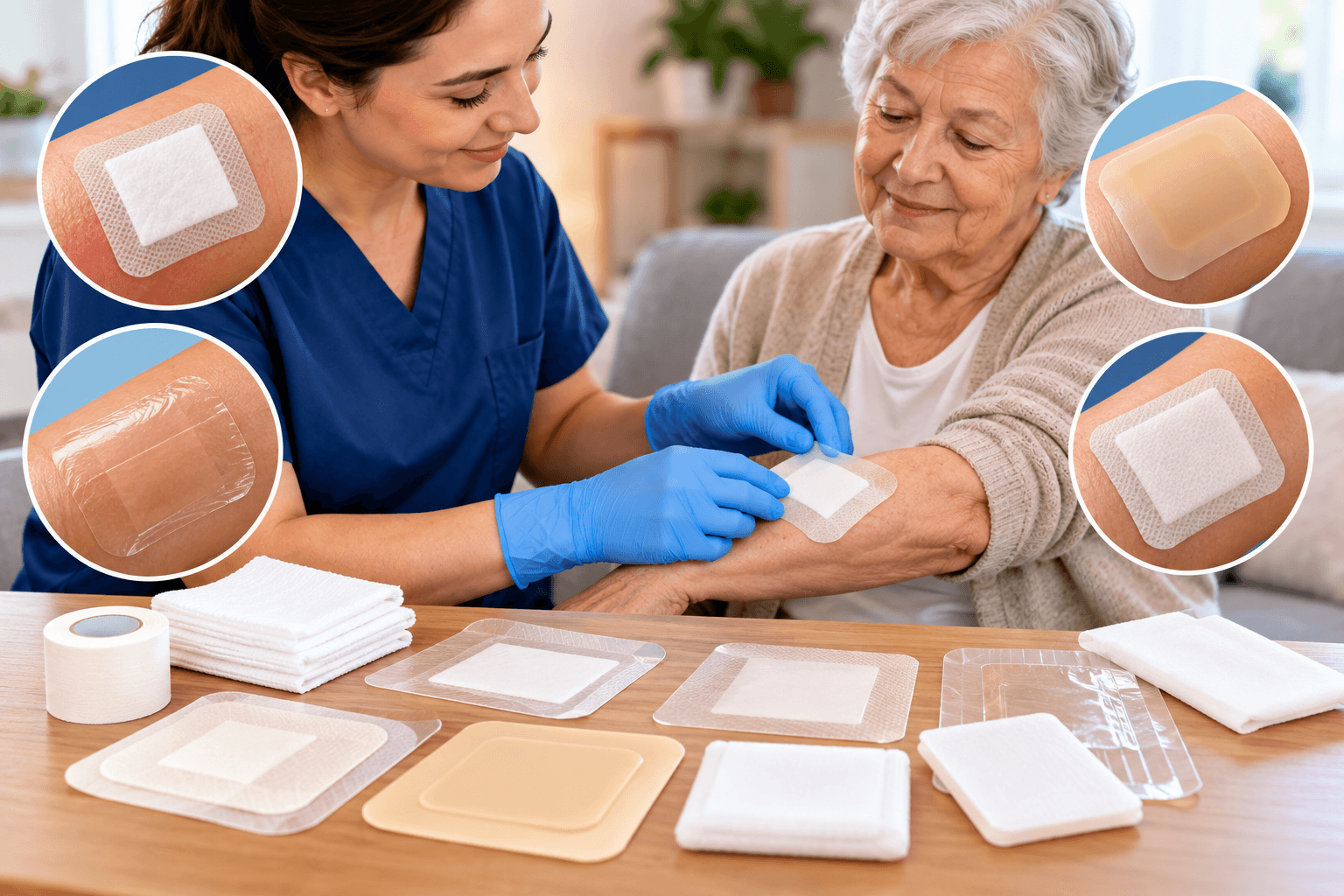
Choosing the right adhesive wound dressing for home care can make daily wound care easier, cleaner, and more comfortable. Adhesive wound dressings are used to cover and protect wounds while helping absorb drainage and keep the dressing in place. They can be useful for minor cuts, post-surgical wounds, skin tears, pressure areas, and other wounds when recommended by a healthcare professional.
An adhesive wound dressing usually has two main parts: an absorbent pad and an adhesive border. The absorbent pad covers the wound, while the adhesive border helps keep the dressing secure on the skin. This can make dressing changes easier for caregivers because a separate tape may not always be needed. However, the right dressing depends on wound size, drainage level, skin sensitivity, wound location, and healthcare instructions.
The first thing caregivers should check is wound size. The dressing should fully cover the wound, and the absorbent pad should sit over the wound area. If the dressing is too small, it may not protect the wound properly. If it is too large, it may feel uncomfortable or stick to unnecessary skin areas. For larger wound coverage, the 3M Medipore +Pad Soft Cloth Adhesive Wound Dressing, 6 x 6 can be useful when a soft cloth adhesive dressing is needed for home care.
For longer or narrower wounds, the 3M Medipore +Pad Soft Cloth Adhesive Wound Dressing, 3.5 x 8 may be a better fit. A dressing with the right shape can help cover the wound more effectively and reduce unnecessary adhesive contact with surrounding skin. Caregivers should avoid cutting adhesive dressings unless the product instructions say it is safe to do so.
Drainage level is another important factor. Some wounds have very little drainage, while others produce more fluid. A basic adhesive dressing may work for lighter drainage, but wounds with moderate or heavy drainage may need a more absorbent product. The McKesson Adhesive Dressing can support general wound-covering needs when an adhesive dressing is appropriate.
For wounds that need stronger absorbency, the ConvaTec Superabsorber Adhesive Wound Dressing can be useful. Superabsorbent dressings may help manage more wound fluid and reduce the chance of leakage through the dressing. Caregivers should still change the dressing as directed, especially if it becomes wet, loose, soiled, or uncomfortable.
Foam dressings can also be helpful when cushioning and absorption are needed. The PolyMem Max Foam Wound Dressing with Adhesive Border, Sterile, 6 x 6 can help provide a protected wound-covering option with an adhesive border. Foam dressings may be useful for wounds that need more padding or moisture management, depending on the care plan.
For smaller wound areas, the 3M Tegaderm Silicone Foam Border Dressing, 2 x 2 can be considered when a smaller bordered foam dressing is needed. Smaller dressings may help reduce waste and improve comfort when the wound area is limited. The dressing should be placed carefully so the wound is fully covered by the pad area.
A silicone adhesive border may be helpful for people with fragile or sensitive skin. The Foam Dressing 3M Tegaderm 4 x 4 Inch with Border Film Backing Silicone Adhesive Square Sterile can support wound protection when a silicone adhesive dressing is preferred. Silicone adhesives may be gentler during removal for some users, but caregivers should still remove dressings slowly and carefully.
For wounds that need a foam dressing without an adhesive border, the 3M Tegaderm Foam High Performance Foam Non-Adhesive Dressing, 3.5 x 3.5 can be useful when separate tape or secondary fixation is needed. Non-adhesive dressings may be preferred when the surrounding skin is very sensitive or when the caregiver wants more control over how the dressing is secured.
Some wounds need absorbent dressings that are not the same as standard adhesive pads. The Deroyal Sofsorb Absorbent Wound Dressing, 4 x 6 can help manage wound drainage when an absorbent dressing is appropriate. Caregivers should choose the dressing type based on wound condition and professional guidance.
For wounds with more moisture or drainage, alginate dressings may sometimes be recommended. The ALGISITE M Calcium Alginate Wound Dressing, 2 x 2 can be useful for smaller wound areas when an alginate dressing is part of the care plan. Alginate dressings are different from basic adhesive dressings and usually need proper instruction for use.
For larger wound areas, the ALGISITE M Calcium Alginate Wound Dressing, 6 x 8 can provide a larger alginate option. Caregivers should not choose alginate dressings only by size. They should also consider the wound type, drainage level, and healthcare advice.
Before applying any adhesive wound dressing, the wound and surrounding skin should be cleaned as directed. The McKesson Irrigation Solution Sodium Chloride can be useful when saline irrigation is recommended for wound cleaning. Saline may help rinse the wound area gently before dressing application.
For home wound cleaning, the Simply Saline Wound Wash can also support wound-care routines when used according to directions. Caregivers should avoid using harsh chemicals, strong soaps, or products not recommended for wound care. After cleaning, the surrounding skin should be dried carefully so the adhesive border can stick properly.
Skin protection is important because repeated dressing changes can irritate the skin. If the adhesive is too strong, removed too quickly, or placed on fragile skin, it may cause redness, peeling, or discomfort. The Cardinal Health Essentials Protective Barrier Wipes, 1-1/4 x 3 can help protect surrounding skin in selected care routines when used as directed. Caregivers should make sure barrier products do not prevent the dressing from sticking properly.
For gentle adhesive removal, the Esenta Sting Free Adhesive Remover Wipes can be useful during dressing changes. Adhesive remover wipes may help reduce pulling and discomfort when removing adhesive borders or medical tape. This can be especially helpful for seniors or people with delicate skin.
Caregivers should also wear gloves during wound care. The Exam Glove McKesson Confiderm 3.0 Large NonSterile Nitrile Standard Cuff Length Textured Fingertips Blue Chemo Tested Fentanyl Tested can help reduce direct contact with wound drainage, used dressings, and cleaning supplies. Hands should be washed before and after wound care, even when gloves are used.
A good dressing-change routine can make home care easier. First, gather all supplies before starting. This may include gloves, wound cleanser or saline, gauze, adhesive dressing, skin barrier wipes, adhesive remover, disposal bag, and clean towels. Next, wash hands, put on gloves, remove the old dressing carefully, and check the wound and surrounding skin. Then clean the wound as directed, dry the surrounding skin, apply the new dressing, and dispose of used supplies properly.
Caregivers should check for warning signs during every dressing change. Contact a healthcare professional if the wound has increased redness, swelling, warmth, pain, pus, bad odor, bleeding, fever, or if the wound is getting larger or not healing. A dressing can help protect a wound, but it cannot replace medical care when a wound is infected, worsening, or serious.
The best adhesive wound dressing depends on the wound and the person’s skin. Soft cloth adhesive dressings may be useful for general wound coverage. Foam adhesive dressings may help when cushioning and absorbency are needed. Superabsorbent dressings may be useful for higher drainage. Non-adhesive dressings may be better when the skin cannot tolerate adhesive. Caregivers should follow wound-care instructions and choose products that match the wound size, drainage, skin condition, and care routine.
Products like the 3M Medipore +Pad Soft Cloth Adhesive Wound Dressing, 6 x 6, 3M Medipore +Pad Soft Cloth Adhesive Wound Dressing, 3.5 x 8, McKesson Adhesive Dressing, ConvaTec Superabsorber Adhesive Wound Dressing, PolyMem Max Foam Wound Dressing with Adhesive Border, Sterile, 6 x 6, 3M Tegaderm Silicone Foam Border Dressing, 2 x 2, Foam Dressing 3M Tegaderm 4 x 4 Inch with Border Film Backing Silicone Adhesive Square Sterile, 3M Tegaderm Foam High Performance Foam Non-Adhesive Dressing, 3.5 x 3.5, Deroyal Sofsorb Absorbent Wound Dressing, 4 x 6, ALGISITE M Calcium Alginate Wound Dressing, 2 x 2, ALGISITE M Calcium Alginate Wound Dressing, 6 x 8, McKesson Irrigation Solution Sodium Chloride, Simply Saline Wound Wash, Cardinal Health Essentials Protective Barrier Wipes, 1-1/4 x 3, Esenta Sting Free Adhesive Remover Wipes, and Exam Glove McKesson Confiderm 3.0 Large NonSterile Nitrile Standard Cuff Length Textured Fingertips Blue Chemo Tested Fentanyl Tested can help support organized home wound care. Explore adhesive wound dressings, foam dressings, absorbent dressings, saline wound wash, gloves, barrier wipes, and adhesive remover products at Zushki to build a cleaner and more prepared wound-care routine.
*Medical Disclaimer ( Important) :
The information provided in this article is for general educational and informational purposes only and is not intended as medical advice, diagnosis, or treatment. Always seek the advice of your physician or another qualified healthcare provider with any questions you may have regarding a medical condition or before using any products, medication, medical device, or healthcare product. Never disregard professional medical advice or delay seeking it because of something you have read on this website. Products offered by Zushki.com are intended to be used in accordance with their labeling and the manufacturer’s instructions. Individual needs and medical conditions vary, and not all products are appropriate for every person. If you believe you are experiencing a medical emergency, call 911 or contact your local emergency services immediately.