
Blog
When to Use Saline Irrigation Solution

When to Use Saline Irrigation Solution*
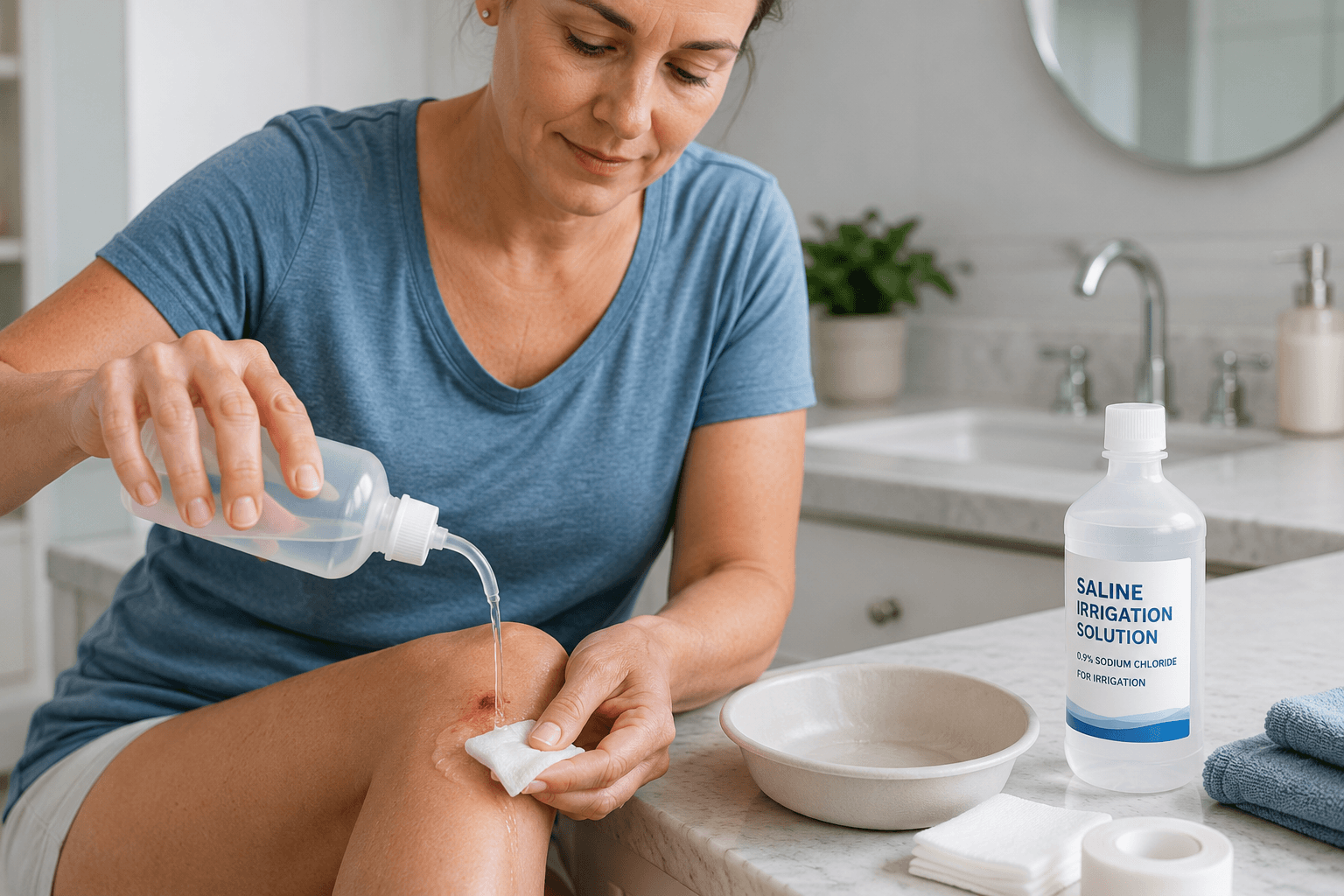
Saline irrigation solution is commonly used in home care, wound care, and caregiver routines to gently rinse and clean an area when simple flushing is needed. It can help remove loose dirt, drainage, dried residue, and unwanted debris from the skin or wound area before applying a dressing or covering. For caregivers, patients, seniors, and home healthcare routines, saline irrigation solution can be a useful supply to keep nearby because it supports cleaner care and makes dressing changes more comfortable.
In wound care, cleaning is an important step. If a wound is not cleaned properly, dried drainage or loose particles may remain on the wound surface or surrounding skin. This can make dressing changes harder and may cause discomfort when a new dressing is applied. Saline irrigation solution can help gently rinse the wound area without using harsh ingredients. It is often used before applying gauze, foam dressings, transparent film dressings, hydrocolloid dressings, or other wound-care products.
One common time to use saline irrigation solution is before changing a wound dressing. During dressing changes, caregivers may notice dried drainage or residue around the wound. Instead of rubbing the skin harshly, the area can be gently rinsed according to the product label and healthcare guidance. This can help prepare the wound and surrounding skin for the next dressing. After rinsing, the area should usually be dried carefully with appropriate sterile gauze or wound-care material before applying a fresh dressing.
Saline irrigation solution may also be useful when removing loose debris from minor wounds. In home care, small wounds can sometimes collect dirt or dried fluid, especially if the wound is in an area that rubs against clothing, bedding, or mobility equipment. A gentle rinse can help clean the area before it is covered. For serious wounds, deep wounds, infected wounds, surgical wounds, heavy bleeding, or wounds that are not healing properly, caregivers should follow medical advice instead of trying to manage the wound alone.
For routine wound cleansing at home, the McKesson Irrigation Solution Sterile Water can be a practical product to keep in a home-care setup. It may be used when a healthcare provider recommends water-based wound cleansing or irrigation. For caregivers who need saline-based wound flushing, the McKesson Irrigation Solution Sodium Chloride can help with gentle rinsing and cleansing. These types of irrigation solutions are commonly used to help remove loose debris, prepare the wound area before dressing application, and support a cleaner daily wound-care routine.
For caregivers who need a mid-size bottle, the Irrigation Solution OTC McKesson 0.9% Sodium Chloride, Not for Injection, Bottle Screw Top, 500 mL can be helpful for regular wound-care routines. A 500 mL bottle can be practical for home care because it provides enough solution for multiple cleansing sessions while still being easy to store with other supplies. It can be kept near wound dressings, gauze, gloves, and disposal bags so caregivers can prepare for dressing changes more easily.
For smaller care needs or travel supply kits, the Irrigation Solution OTC McKesson 0.9% Sodium Chloride, Not for Injection, Bottle Screw Top, 250 mL can be a convenient choice. A smaller bottle is easy to keep in a first-aid bag, bedside care station, or caregiver kit. It may be useful when only a limited amount of solution is needed for light wound cleansing or routine care.
For larger-volume use, the Irrigation Solution OTC McKesson 0.9% Sodium Chloride, Not for Injection, Bottle, 1000 mL can support caregivers who need more solution for frequent wound irrigation or repeated care routines. A larger bottle can be helpful in care environments where supplies are used regularly, such as home healthcare, senior care, or caregiver-assisted dressing changes.
Caregivers may also use saline irrigation solution when cleaning the surrounding skin before applying a dressing. Clean surrounding skin helps dressings stay in place better and may reduce discomfort during changes. However, the skin should be dried gently before applying adhesive dressings, medical tape, or wound covers. If moisture remains on the skin, some dressings may not stick properly.
When using irrigation solution, caregivers should prepare all supplies before starting. This may include gloves, gauze, wound cleanser, irrigation solution, dressings, medical tape, underpads, and disposal bags. Washing hands and wearing gloves can help reduce contamination during wound care. Underpads can help protect beds, chairs, or surfaces while cleaning the wound. Disposal bags make it easier to remove used gauze, dressings, and gloves in a clean and organized way.
It is important to use the correct type of solution for the correct purpose. Products labeled “not for injection” should never be injected. They should only be used according to product labeling and healthcare guidance. If the wound looks worse, has unusual odor, increased redness, swelling, heavy drainage, severe pain, or signs of infection, a healthcare professional should be contacted.
Choosing the right bottle size also matters. A 250 mL bottle may be useful for occasional use, while a 500 mL bottle may be better for regular home care. A 1000 mL bottle may be suitable for frequent wound cleansing or caregiver routines where more solution is needed. Sterile water and sodium chloride irrigation solutions can both be useful, but the right choice should depend on the wound-care instructions given by a healthcare provider.
Saline irrigation solution can support wound care by helping rinse away loose debris, cleanse the wound area, prepare the skin for dressings, and make dressing changes more comfortable. Products like the McKesson Irrigation Solution Sterile Water, McKesson Irrigation Solution Sodium Chloride, Irrigation Solution OTC McKesson 0.9% Sodium Chloride, Not for Injection, Bottle Screw Top, 500 mL, Irrigation Solution OTC McKesson 0.9% Sodium Chloride, Not for Injection, Bottle Screw Top, 250 mL, and Irrigation Solution OTC McKesson 0.9% Sodium Chloride, Not for Injection, Bottle, 1000 mL can help caregivers build a cleaner and more prepared wound-care routine. Explore irrigation solutions and related wound-care supplies at Zushki to find dependable products for home care, caregiver support, and daily wound cleansing.
*Medical Disclaimer ( Important) :
The information provided in this article is for general educational and informational purposes only and is not intended as medical advice, diagnosis, or treatment. Always seek the advice of your physician or another qualified healthcare provider with any questions you may have regarding a medical condition or before using any products, medication, medical device, or healthcare product. Never disregard professional medical advice or delay seeking it because of something you have read on this website.
Products offered by Zushki.com are intended to be used in accordance with their labeling and the manufacturer’s instructions. Individual needs and medical conditions vary, and not all products are appropriate for every person. If you believe you are experiencing a medical emergency, call 911 or contact your local emergency services immediately.