
Blog
How to make diaper changes easier for caregivers

How to make diaper changes easier for caregivers*
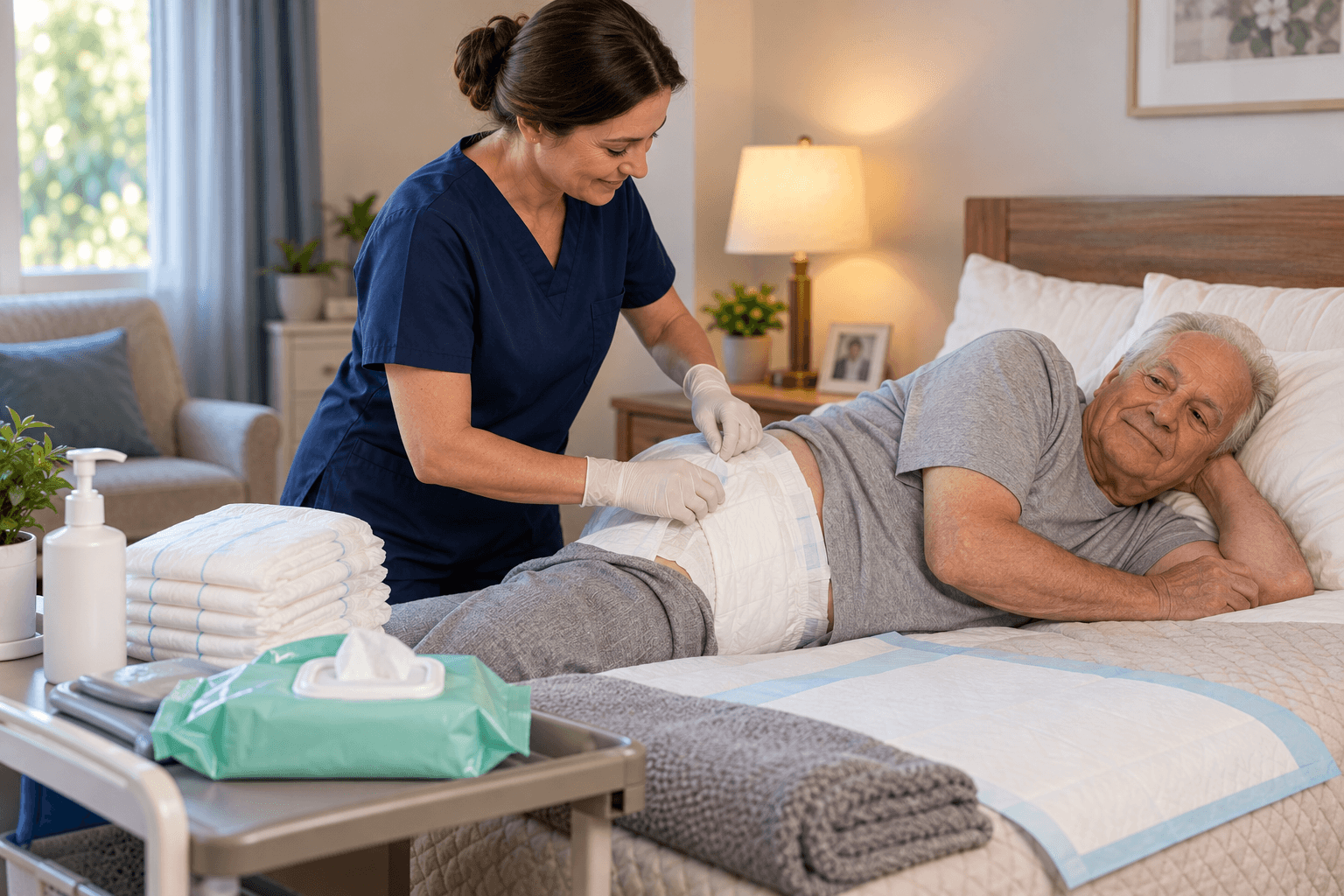
Diaper changes are a regular part of incontinence care, senior care, bedside care, and daily home-care routines. For caregivers, the process can feel stressful when supplies are not ready, the product does not fit well, or the skin needs extra cleaning after leaks. A better routine can make diaper changes faster, cleaner, more comfortable, and more respectful for both the caregiver and the person receiving care.
The first step is preparation. Caregivers should keep all supplies within reach before starting a diaper change. This may include adult diapers, pads, booster pads, underpads, wipes, disposable washcloths, skin cleanser, gloves, disposal bags, and clean clothing. Having everything ready helps avoid leaving the person unattended or searching for supplies during the change. Zushki’s home-care content also recommends keeping a small bedside care station with gloves, wipes, underpads, adult diapers, cleanser, disposal bags, and clean clothing for easier caregiver routines.
Choosing the right adult diaper is one of the most important ways to make changes easier. A product that fits poorly can leak, shift, bunch up, or feel uncomfortable. For seniors who need tab-style protection, the Attends Adult Diapers with Tabs, Heavy can be useful for daily incontinence care. Tab-style briefs may be easier for caregivers to change when the person has limited mobility or needs help while lying down.
For seniors who need moderate absorbency, the McKesson Super Brief Adult Diapers with Tabs, Moderate Absorbency can support routine care. A moderate-absorbency adult brief may be useful when the person needs regular protection but does not always require the heaviest option. Caregivers should check the fit around the waist and legs to help reduce leaks and avoid discomfort.
For heavier leakage, the McKesson Ultra Plus Stretch Adult Briefs with Tabs, Heavy can help provide stronger protection. Heavy-absorbency briefs may be helpful for nighttime care, longer wear periods, or seniors who have frequent leakage. Even with a high-absorbency product, caregivers should change the brief when it becomes wet or soiled to help protect skin comfort.
Another useful option is the Seni Super Quatro Adult Diapers with Tabs. Tab-style products like this can make changes easier because the caregiver can remove and apply the brief without requiring the person to fully stand. This can be helpful for seniors with weakness, limited balance, or mobility challenges.
For extra absorbency, booster pads can be helpful when used correctly with a main absorbent product. The Seni Booster Pads can support caregivers who need extra absorbency inside a primary incontinence product. Zushki’s product page notes that soiled booster pads can be removed while the main absorbent product may continue to be used, depending on the situation and product condition.
Underpads can make diaper changes much easier by protecting the bed, chair, wheelchair, recliner, or changing surface. The Presto Underpads, Heavy Absorbency can be useful during diaper changes because they help catch leaks, spills, and moisture before they reach bedding or furniture. A clean underpad under the person can reduce laundry and make cleanup faster.
For everyday surface protection, the McKesson Super Underpads, Moderate Absorbency can also support diaper-change routines. Caregivers can place an underpad under the hips before removing the used brief. This helps protect bedding while the caregiver cleans the skin and prepares the fresh product.
For seniors who need help turning or shifting in bed, the MoliCare Repositioning Underpad can be helpful in selected care routines. Zushki’s product page describes it as useful for protecting beds and furniture while also supporting repositioning for users up to a listed weight limit.
Cleaning the skin gently is another important part of diaper changes. Urine, stool, sweat, and moisture should be removed carefully to help reduce odor and irritation. The Abena Pre-Moistened Cleansing Wipes can be useful for quick cleaning during diaper changes, bedside care, and daily hygiene routines. Pre-moistened wipes can help caregivers clean the skin when a full bath or shower is not possible.
For sensitive skin, the Attends Personal Wipes with Aloe, Unscented can support gentle cleaning. Unscented wipes may be preferred when strong fragrance is not suitable. Caregivers should wipe gently and avoid harsh rubbing, especially around the groin, buttocks, inner thighs, and skin folds.
For larger cleanup needs, the McKesson Rinse-Free Bathing Cloths can make diaper changes easier. Rinse-free bathing cloths may be useful after heavier accidents or when a senior needs more complete bedside cleaning. They can reduce the need for extra towels and make cleanup faster.
A no-rinse cleanser can also support better hygiene during diaper changes. The 3M Cavilon No Rinse Skin Cleanser, Floral Scent, 8 oz can be useful when caregivers need to clean the skin without a full rinse. After cleaning, the skin should be gently dried before applying a new diaper, pad, booster pad, or underpad.
Disposable gloves help caregivers keep diaper changes cleaner and safer. The Exam Glove McKesson Confiderm 3.0 Large NonSterile Nitrile Standard Cuff Length Textured Fingertips Blue Chemo Tested Fentanyl Tested can be useful when handling wet or soiled briefs, wipes, underpads, and cleansing supplies. Gloves should be changed between dirty and clean steps whenever needed.
The way a diaper change is done also matters. Caregivers should speak calmly, explain each step, and protect privacy as much as possible. If the person can help by rolling, lifting the hips, or holding onto a bed rail, allow them to participate safely. This can make the process easier and help the senior feel more respected.
For a bed-level diaper change, caregivers can first place an underpad under the person. Next, put on gloves and open the clean diaper before removing the used one. Then loosen the tabs, fold the soiled brief inward, and clean the skin gently from front to back. After cleaning, dry the skin carefully, place the clean brief under the person, pull the front panel into position, and secure the tabs without making the brief too tight.
Fit is very important after the fresh diaper is applied. A diaper that is too loose can leak around the legs or waist. A diaper that is too tight can cause marks, discomfort, or skin irritation. The brief should sit securely against the body without pulling harshly. Caregivers should check the leg openings, waist fit, and tabs before finishing the change.
Pads can also be useful for seniors who do not always need a full adult brief. The Attends Incontinence Pads for Adults can support light to moderate leakage and may help reduce the number of full brief changes for some users. Zushki’s product page notes that these pads have adhesive strips to help keep the pad in place inside regular underwear.
The Prevail Pads, Ultimate can also be useful for seniors who need pad-style incontinence protection. Pads should be changed when wet or uncomfortable. They may be helpful for mobile seniors who still use the bathroom but need backup protection during the day.
Caregivers should also use a regular checking schedule. Waiting too long between changes can lead to leaks, odor, skin irritation, and more laundry. A simple schedule may include checks after meals, before bed, during nighttime care, after waking, and any time the person feels wet or uncomfortable. The schedule should match the person’s leakage level and care needs.
Used products should be disposed of quickly. Wet diapers, pads, wipes, gloves, and underpads should be placed into a lined trash bag. The bag should be closed and removed from the room regularly to help control odor. Clean supplies should be kept separate from used products, and caregivers should wash hands before and after each change.
Skin should be checked during every diaper change. Caregivers should look for redness, rash, swelling, open skin, odor, pain, or areas that seem irritated. If the skin looks worse, becomes painful, or does not improve, a healthcare professional should be contacted. Diaper changes are not only about replacing the product; they are also a chance to notice skin changes early.
Diaper changes become easier when caregivers use the right combination of absorbent products, cleaning supplies, surface protection, and a calm routine. Products like the Attends Adult Diapers with Tabs, Heavy, McKesson Super Brief Adult Diapers with Tabs, Moderate Absorbency, McKesson Ultra Plus Stretch Adult Briefs with Tabs, Heavy, Seni Super Quatro Adult Diapers with Tabs, Seni Booster Pads, Presto Underpads, Heavy Absorbency, McKesson Super Underpads, Moderate Absorbency, MoliCare Repositioning Underpad, Abena Pre-Moistened Cleansing Wipes, Attends Personal Wipes with Aloe, Unscented, McKesson Rinse-Free Bathing Cloths, 3M Cavilon No Rinse Skin Cleanser, Floral Scent, 8 oz, Exam Glove McKesson Confiderm 3.0 Large NonSterile Nitrile Standard Cuff Length Textured Fingertips Blue Chemo Tested Fentanyl Tested, Attends Incontinence Pads for Adults, and Prevail Pads, Ultimate can help caregivers build a cleaner, faster, and more comfortable diaper-change routine. Explore adult diapers, underpads, booster pads, wipes, cleansers, gloves, and related incontinence care supplies at Zushki to support daily caregiver routines.
*Medical Disclaimer ( Important) :
The information provided in this article is for general educational and informational purposes only and is not intended as medical advice, diagnosis, or treatment. Always seek the advice of your physician or another qualified healthcare provider with any questions you may have regarding a medical condition or before using any products, medication, medical device, or healthcare product. Never disregard professional medical advice or delay seeking it because of something you have read on this website. Products offered by Zushki.com are intended to be used in accordance with their labeling and the manufacturer’s instructions. Individual needs and medical conditions vary, and not all products are appropriate for every person. If you believe you are experiencing a medical emergency, call 911 or contact your local emergency services immediately.