
Blog
When should caregivers use medical adhesive remover wipes?

When should caregivers use medical adhesive remover wipes?*
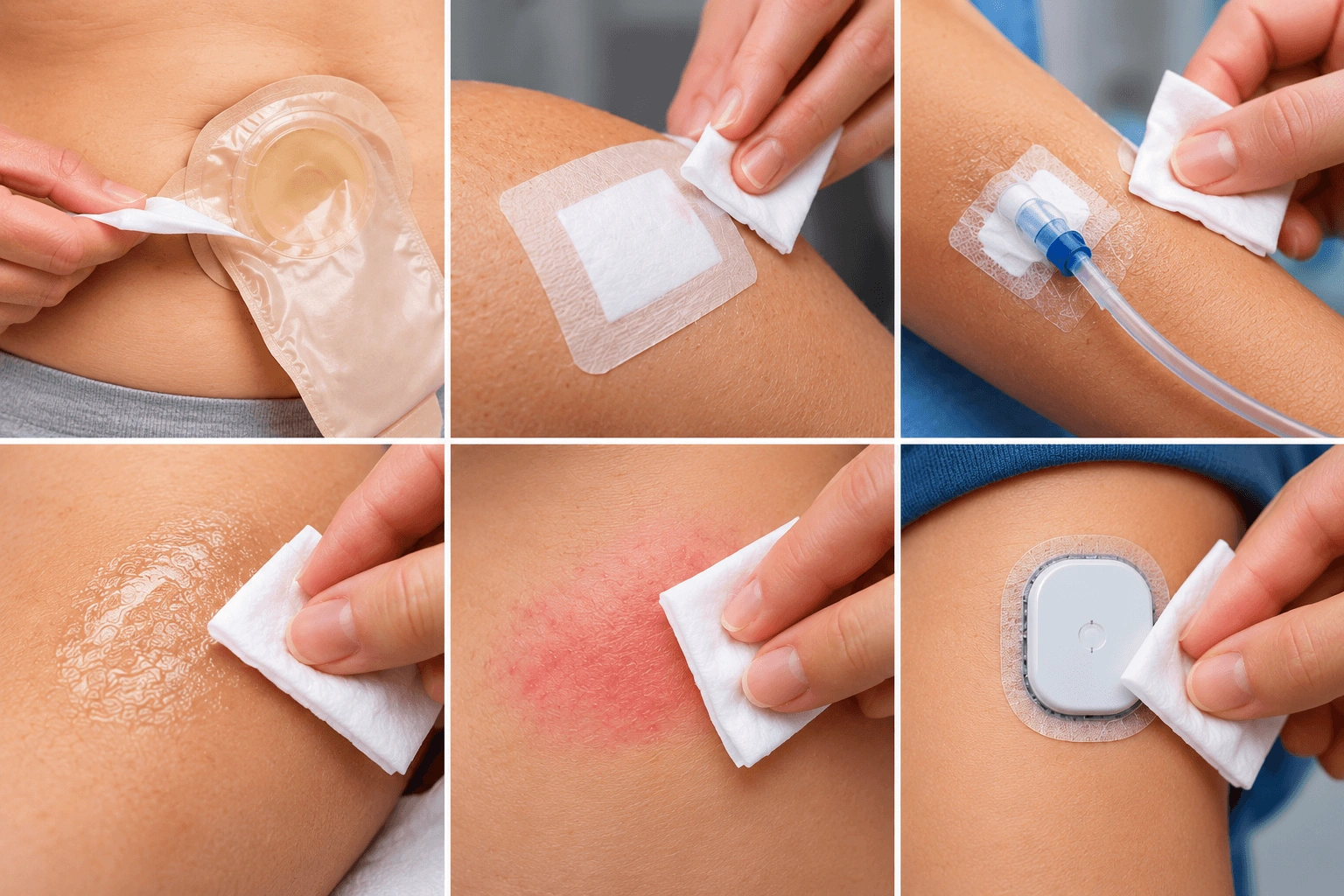
Medical adhesive remover wipes can be helpful when caregivers need to remove adhesive products from the skin more gently. Many home-care routines involve products that stick to the skin, such as wound dressings, medical tape, ostomy barriers, external catheters, skin barriers, and securement devices. When these products are removed too quickly or without support, they may pull the skin, leave sticky residue, or cause discomfort. Adhesive remover wipes can make removal easier and help protect delicate skin during daily care.
Caregivers may need adhesive remover wipes when removing wound dressings with adhesive borders. Adhesive wound dressings help keep wounds covered and protected, but repeated dressing changes can irritate the surrounding skin. For example, the 3M Medipore +Pad Soft Cloth Adhesive Wound Dressing, 6 x 6 can be useful for wound coverage, but caregivers should remove adhesive borders slowly and carefully. If the dressing sticks too strongly, an adhesive remover wipe may help reduce pulling.
For longer wound areas, the 3M Medipore +Pad Soft Cloth Adhesive Wound Dressing, 3.5 x 8 may be used when the shape is suitable for the wound. Since a longer adhesive area may contact more skin, gentle removal becomes even more important. Caregivers should support the skin with one hand while removing the dressing slowly with the other hand.
Adhesive remover wipes may also be useful when removing foam dressings with borders. The PolyMem Max Foam Wound Dressing with Adhesive Border, Sterile, 6 x 6 can help protect wounds that need cushioning and absorption. If the border is difficult to remove or the skin is fragile, an adhesive remover wipe may help loosen the adhesive before the dressing is lifted away.
For smaller bordered foam dressings, the 3M Tegaderm Silicone Foam Border Dressing, 2 x 2 may be used when a smaller dressing is needed. Silicone borders may be gentler for some users, but caregivers should still remove them slowly. Even gentle adhesives can cause discomfort if the dressing is pulled off too quickly.
Caregivers may also use adhesive remover wipes with transparent film dressings. Transparent film dressings can stick closely to the skin and may be used to cover or protect selected areas. When removing film dressings, caregivers should avoid pulling straight up from the skin. Instead, they can loosen an edge and gently stretch or peel the film back while using an adhesive remover wipe if needed.
Ostomy care is another common time when adhesive remover wipes may be helpful. Ostomy barriers and pouching systems use adhesive to stay secure around the stoma. Removing these products without support can irritate the peristomal skin. The SenSura Mio Click Ostomy Barrier Flexible Secure Fit System can support ostomy pouching routines, but caregivers should remove the barrier gently during pouch changes.
For users with a cut-to-fit barrier, the Coloplast SenSura Mio Click Ostomy Barrier, Cut-to-fit, Belt Tabs, 10-55 mm Stoma may be used when the stoma size needs a customized opening. During removal, adhesive remover wipes can help reduce skin pulling around the abdomen and peristomal area. This may be especially helpful for users who change pouching systems regularly.
Barrier rings and adhesive strips can also leave residue on the skin. The McKesson Barrier Rings can help improve the seal around a stoma, while the Coloplast Brava Adhesive Barrier Strips can help secure barrier edges. Because these products are designed to stay in place, adhesive remover wipes may help caregivers remove residue more comfortably.
External catheter care is another situation where adhesive remover wipes may be useful. Male external catheters use adhesive or self-sealing material to stay in place on the skin. The Coloplast Freedom Clear Silicone Male External Urinary Catheter can support non-invasive urinary management for selected users. When removing an external catheter, caregivers should avoid pulling quickly, because delicate skin can become irritated.
The Hollister Extended Male External Catheter and Spirit 3 Male External Urinary Catheter for Comfort and Security may also require careful removal. Adhesive remover wipes can help loosen adhesive and reduce residue before a new external catheter is applied. The skin should be cleaned and dried before applying a fresh product.
For adhesive removal itself, the Esenta Sting Free Adhesive Remover Wipes can be useful during wound care, ostomy care, catheter care, and dressing changes. Sting-free adhesive remover wipes may help reduce discomfort when removing medical adhesives from sensitive skin. Caregivers should use them according to the product label and avoid using them directly inside open wounds unless instructed by a healthcare professional.
Another option is the Detachol Adhesive Remover, 4 oz.. This type of adhesive remover can help remove adhesive residue from skin when wipes are not preferred. Caregivers should apply it carefully and follow the directions. After adhesive remover is used, the skin may need to be cleaned and dried before applying a new dressing, ostomy barrier, or external catheter.
Caregivers should consider adhesive remover wipes when the person has fragile skin. Seniors, older adults, and people who need frequent dressing changes may have skin that tears or becomes red easily. If adhesive products are removed daily or several times per week, repeated pulling can make the skin sore. Adhesive remover wipes can help make removal smoother and more comfortable.
Adhesive remover wipes may also be helpful when sticky residue remains after removing tape or dressings. Residue can make the skin feel tacky, attract lint, or make the next product difficult to apply smoothly. Removing residue can help prepare the skin for a fresh dressing or device. However, the skin should be fully dry before applying the next adhesive product.
Wound-care routines may also include protective barrier wipes. The Cardinal Health Essentials Protective Barrier Wipes, 1-1/4 x 3 can help protect surrounding skin in selected care routines after the skin is clean and dry. Caregivers should understand the difference: adhesive remover wipes help remove adhesive, while protective barrier wipes help add a protective layer before applying some products.
For people with sensitive skin, the Esenta Gentle Sting-Free Skin Barrier Wipes may help protect skin before adhesive products are applied, depending on the care routine. Barrier wipes should not be used as adhesive remover wipes. Each product has a different purpose, and caregivers should follow product instructions carefully.
Gloves are useful when using adhesive remover wipes. The Exam Glove McKesson Confiderm 3.0 Large NonSterile Nitrile Standard Cuff Length Textured Fingertips Blue Chemo Tested Fentanyl Tested can help caregivers reduce direct contact with used dressings, adhesive residue, wound drainage, ostomy output, catheter products, and cleaning supplies. Gloves should be changed between dirty and clean steps when needed.
A simple adhesive removal routine can make care easier. First, wash hands and put on gloves. Next, loosen one edge of the adhesive product. Then use the adhesive remover wipe near the adhesive edge while slowly peeling the product back. Support the skin with one hand and avoid pulling upward sharply. After removal, clean the area if needed, dry the skin, check for irritation, and apply the next product only when the skin is ready.
Caregivers should not use adhesive remover wipes as a substitute for medical care. If the skin is open, bleeding, infected, severely irritated, painful, or worsening, a healthcare professional should be contacted. Adhesive remover wipes may help reduce pulling and residue, but they do not treat infection, deep wounds, allergic reactions, or serious skin breakdown.
Adhesive remover wipes are most useful when adhesive products are difficult to remove, when the skin is fragile, when residue remains, or when the person feels discomfort during dressing, ostomy, or catheter product changes. They can be a helpful part of a home-care supply kit for caregivers who regularly manage wound care, ostomy care, catheter care, or sensitive-skin routines.
Products like the Esenta Sting Free Adhesive Remover Wipes, Detachol Adhesive Remover, 4 oz., 3M Medipore +Pad Soft Cloth Adhesive Wound Dressing, 6 x 6, 3M Medipore +Pad Soft Cloth Adhesive Wound Dressing, 3.5 x 8, PolyMem Max Foam Wound Dressing with Adhesive Border, Sterile, 6 x 6, 3M Tegaderm Silicone Foam Border Dressing, 2 x 2, SenSura Mio Click Ostomy Barrier Flexible Secure Fit System, Coloplast SenSura Mio Click Ostomy Barrier, Cut-to-fit, Belt Tabs, 10-55 mm Stoma, McKesson Barrier Rings, Coloplast Brava Adhesive Barrier Strips, Coloplast Freedom Clear Silicone Male External Urinary Catheter, Hollister Extended Male External Catheter, Spirit 3 Male External Urinary Catheter for Comfort and Security, Cardinal Health Essentials Protective Barrier Wipes, 1-1/4 x 3, Esenta Gentle Sting-Free Skin Barrier Wipes, and Exam Glove McKesson Confiderm 3.0 Large NonSterile Nitrile Standard Cuff Length Textured Fingertips Blue Chemo Tested Fentanyl Tested can help caregivers manage adhesive removal and daily skin protection more comfortably. Explore adhesive remover wipes, wound dressings, ostomy barriers, catheter supplies, skin barrier wipes, gloves, and related home-care supplies at Zushki to build a cleaner and more prepared care routine.
*Medical Disclaimer ( Important) :
The information provided in this article is for general educational and informational purposes only and is not intended as medical advice, diagnosis, or treatment. Always seek the advice of your physician or another qualified healthcare provider with any questions you may have regarding a medical condition or before using any products, medication, medical device, or healthcare product. Never disregard professional medical advice or delay seeking it because of something you have read on this website. Products offered by Zushki.com are intended to be used in accordance with their labeling and the manufacturer’s instructions. Individual needs and medical conditions vary, and not all products are appropriate for every person. If you believe you are experiencing a medical emergency, call 911 or contact your local emergency services immediately.