
Blog
How to choose the right Transparent Film Dressings?

How to choose the right Transparent Film Dressings?*
Transparent film Dressings are useful wound-care products that help protect wounds, skin, and Dressing sites during daily care. They are commonly used because they create a thin protective cover over the skin while still allowing caregivers or patients to see the covered area. For home care, senior care, post-procedure care, and general wound protection, choosing the right transparent film Dressing can help reduce exposure to dirt, friction, moisture, and outside contamination. A good dressing should stay in place, feel comfortable on the skin, protect the wound area, and support a cleaner healing environment.
A transparent film Dressing is usually thin, flexible, and adhesive. It can help cover minor wounds, secure other Dressings, protect skin from friction, and keep the wound area covered during normal daily movement. Some transparent film Dressings include a non-adherent pad in the center, while others are clear film Dressings without a pad. The best choice depends on the wound type, drainage level, skin sensitivity, Dressing size, and how much protection is needed.
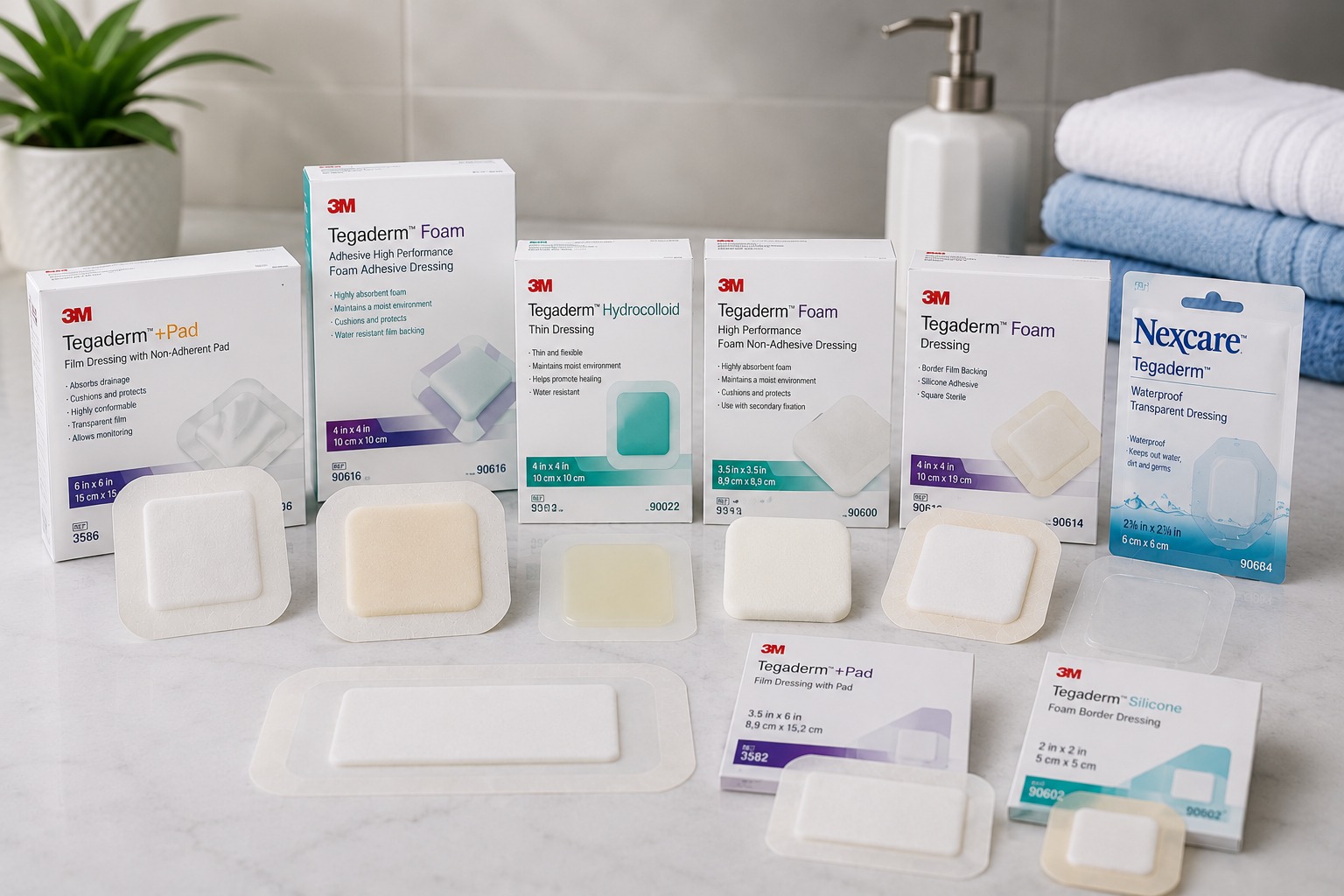
For wounds that need a transparent film Dressing with a soft non-adherent pad, the 3M Tegaderm + Pad Film Dressing with Non-Adherent Pad, 6 x 6 can be a helpful option. The non-adherent pad helps cover the wound without sticking directly to the wound bed, while the transparent film border helps secure the Dressing. This type of Dressing may be useful for minor wounds, post-care protection, and situations where the wound needs both coverage and a soft absorbent center.
For a smaller film Dressing with a pad, the 3M Tegaderm + Pad Film Dressing, 3.5 x 6 can be a practical choice. A narrower Dressing size may be helpful for smaller wound areas or areas where a large Dressing would feel uncomfortable. Choosing the right size is important because the dressing should fully cover the wound and surrounding skin without being too large, loose, or difficult to apply.
For waterproof protection, the Nexcare Tegaderm Waterproof Transparent Dressing can be useful for daily wound protection. A waterproof transparent Dressing helps keep the covered area protected during light exposure to water when used according to product instructions. Because it is transparent, caregivers can monitor the covered area without removing the Dressing unnecessarily. This can help reduce repeated dressing changes and support a more comfortable care routine.
Transparent film Dressings are often chosen because they allow visual monitoring. If a wound area needs to be checked regularly, a clear Dressing can make it easier to notice changes such as redness, fluid buildup, or dressing movement. This is helpful for caregivers who want to keep an eye on the wound area while still keeping it protected. However, serious wounds, infected wounds, surgical wounds, deep wounds, or wounds with heavy drainage should always be managed with healthcare professional guidance.
Some wounds need more absorption than a simple transparent film Dressing can provide. For wounds with more fluid or drainage, the 3M Tegaderm Foam Adhesive High Performance Foam Adhesive Dressing can help absorb moisture while staying in place. Foam Dressings are often used when extra cushioning and absorption are needed. This can help protect the wound from friction and support a cleaner Dressing environment during daily movement.
For wounds that need foam protection without adhesive edges, the 3M Tegaderm Foam High Performance Foam Non-Adhesive Dressing, 3.5 x 3.5 may be useful. A non-adhesive foam Dressing can be secured with tape, wrap, or another secondary Dressing. This can be a good option for sensitive skin or areas where a caregiver wants more control over how the Dressing is secured.
For users who want foam protection with a border, the Foam Dressing 3M Tegaderm 4 x 4 Inch with Border Film Backing Silicone Adhesive Square Sterile can support comfortable wound coverage. Silicone adhesive borders may feel gentler during removal compared with some stronger adhesives. This can be useful for seniors, patients with delicate skin, or wounds that need regular Dressing changes.
For selected wound-care needs where a moist wound environment may be helpful, the 3M Tegaderm Hydrocolloid Thin Dressing, 4 x 4 can be considered. Hydrocolloid Dressings are different from transparent film Dressings, but they may be useful for certain wounds based on care instructions. A thin hydrocolloid Dressing can feel flexible and comfortable in areas where the skin moves.
For small wound areas or pressure points that need gentle cushioning, the 3M Tegaderm Silicone Foam Border Dressing, 2 x 2 can be helpful. A smaller silicone foam border Dressing can protect the wound area while helping reduce friction. This can be useful when comfort and secure placement are important.
When choosing the right transparent film Dressing, caregivers should first look at the wound type and drainage level. A dry or lightly draining wound may be suitable for a transparent film Dressing or film Dressing with a pad. A wound with moderate drainage may need a foam Dressing
instead. A wound that needs a moist healing environment may require a hydrocolloid Dressing if recommended by a healthcare professional. The Dressing should be large enough to cover the wound and surrounding skin, but not so large that it wrinkles or lifts easily.
Skin comfort is also important. A Dressing that pulls too strongly on fragile skin can cause irritation or discomfort. Before applying a Dressing, the skin should be clean and dry. During Dressing changes, caregivers should remove the Dressing gently and check the wound area for redness, swelling, odor, increased pain, unusual drainage, or other changes. If the wound appears worse or does not heal properly, medical guidance should be requested.
Caregivers should also keep supporting supplies nearby, such as disposable gloves, wound cleansers, gauze, medical tape, underpads, and disposal bags. Gloves help reduce contamination during Dressing changes. Cleansing products help prepare the skin and surrounding area. Underpads can protect beds, chairs, or changing surfaces during wound care. Keeping supplies organized can make wound care safer, faster, and less stressful.
Transparent film Dressings can help protect wounds during daily care by covering the wound, reducing friction, supporting visual monitoring, and helping maintain a cleaner care routine. Products like the 3M Tegaderm + Pad Film Dressing with Non-Adherent Pad, 6 x 6, 3M Tegaderm + Pad Film Dressing, 3.5 x 6, Nexcare Tegaderm Waterproof Transparent Dressing, 3M Tegaderm Foam Adhesive High Performance Foam Adhesive Dressing, 3M Tegaderm Foam High Performance Foam Non-Adhesive Dressing, 3.5 x 3.5, Foam Dressing 3M Tegaderm 4 x 4 Inch with Border Film Backing Silicone Adhesive Square Sterile, 3M Tegaderm Hydrocolloid Thin Dressing, 4 x 4, and 3M Tegaderm Silicone Foam Border Dressing, 2 x 2 can support different wound care needs, including wound coverage, moisture control, cushioning, waterproof protection, and gentle daily care. Explore transparent film Dressings, Tegaderm Dressings, and related wound-care supplies at Zushki to find dependable products for home care, caregiver support, and daily wound protection.
*Medical Disclaimer ( Important) :
The information provided in this article is for general educational and informational purposes only and is not intended as medical advice, diagnosis, or treatment. Always seek the advice of your physician or another qualified healthcare provider with any questions you may have regarding a medical condition or before using any products, medication, medical device, or healthcare product. Never disregard professional medical advice or delay seeking it because of something you have read on this website.
Products offered by Zushki.com are intended to be used in accordance with their labeling and the manufacturer’s instructions. Individual needs and medical conditions vary, and not all products are appropriate for every person. If you believe you are experiencing a medical emergency, call 911 or contact your local emergency services immediately.