
Blog
How to Choose the Right Underpad for Incontinence Care or Limited Mobility

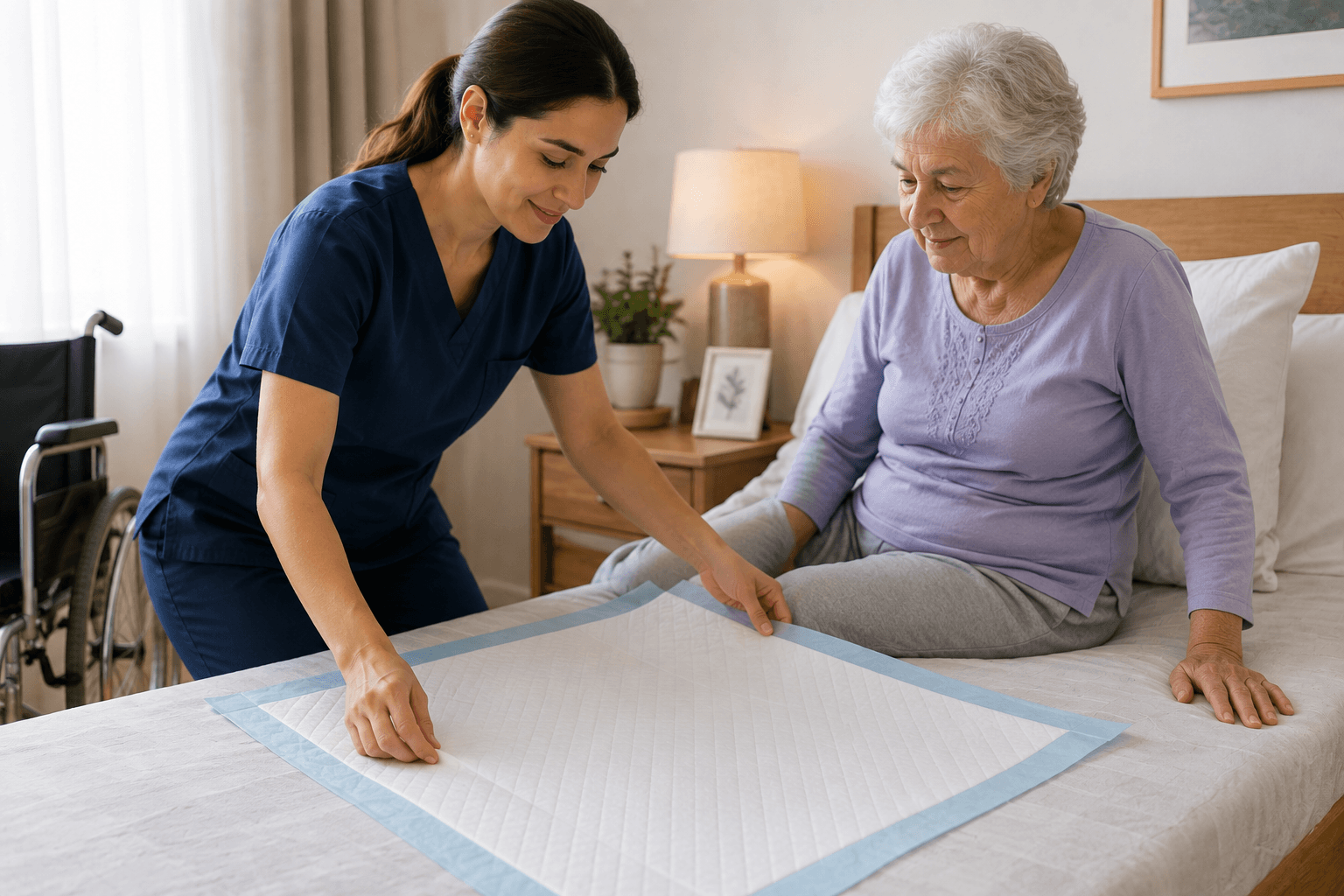
How to Choose the Right Underpad for Incontinence Care or Limited Mobility*
Choosing the right underpads for bed protection is important for caregivers, seniors, patients, and anyone managing incontinence or limited mobility at home. Underpads, also called bed pads or disposable underpads, help protect mattresses, sheets, chairs, wheelchairs, recliners, and other surfaces from leaks and moisture. For daily home care, the right underpad can reduce laundry, protect furniture, make cleanup easier, and help the person receiving care feel more comfortable.
Underpads are often used for elderly adults, bedridden patients, post-surgery recovery, incontinence care, wound care, ostomy care, and nighttime leakage protection. They are placed under the person or on the surface that needs protection. A good underpad should have a soft top layer, strong absorbency, a waterproof backing, and enough size coverage for the bed or chair. Choosing the correct underpad depends on absorbency level, surface size, mobility needs, and how often changes are required.
One of the most important things to consider is absorbency. Light absorbency may be enough for small leaks or short-term use, while moderate or heavy absorbency may be better for overnight care, frequent leakage, or people who spend long hours in bed. For everyday protection, the McKesson Super Underpads, Moderate Absorbency can be a practical option for caregivers who need surface protection during incontinence care, bed changes, or daily hygiene routines. A moderate-absorbency underpad can help keep bedding and furniture cleaner while making changes easier.
For users who need strong surface protection and comfort, the Prevail Total Care Underpads, Super can be helpful for beds, wheelchairs, couches, and car seats. Underpads with a soft top layer can make it more comfortable for a person to rest on the pad for longer periods, while the absorbent core helps lock in moisture. This type of underpad can be useful for nighttime leakage, furniture protection, and caregiver-assisted changes.
For people who need breathable bed protection, the TENA InstaDri Air Underpad can support daily care by helping protect surfaces while keeping comfort in mind. Air-style underpads may be useful for users who spend extended time in bed or on pressure-reducing surfaces. Caregivers should choose underpads that match the user’s care needs and the type of bed or support surface being used.
For caregivers who also need repositioning support, the MoliCare Repositioning Underpad can be useful in selected care routines. Repositioning underpads may help caregivers move or adjust a person more easily while also supporting surface protection. This can be especially helpful for people with limited mobility who need assistance turning, shifting, or transferring in bed.
Underpads work best when they are part of a complete incontinence care routine. For users with heavier leakage, underpads should usually be used together with adult diapers or protective underwear rather than as the only protection. For example, the Prevail Daily Adult Diapers with Tabs, Maximum can provide direct body protection while an underpad protects the bed or chair as backup. This combination can help reduce leaks, improve comfort, and make daily care easier.
For overnight or heavier incontinence needs, the Abena Abri-Form L4 can be another helpful product to use with bed underpads. A high-absorbency adult diaper can help manage leakage directly, while the underpad provides extra protection for bedding. This is especially useful during nighttime care when changes may happen less often and bedding protection becomes more important.
Wipes and skin care products are also important when using underpads. Moisture on the skin can cause irritation if it is not cleaned properly. The Hygea Flushable Personal Wipes can help caregivers clean the skin during diaper changes, underpad changes, or toileting routines. Gentle cleaning helps the person feel fresh and can support better hygiene during daily care.
For skin cleansing after incontinence episodes or extended time in bed, the 3M Cavilon No Rinse Skin Cleanser, Floral Scent, 8 oz can be useful for caregiver routines. A no-rinse cleanser can help clean the skin when a full bath or shower is difficult. This can be helpful for elderly adults, bedridden patients, and people who need bedside hygiene support.
Caregivers should also use disposable gloves during underpad changes, especially when handling urine, stool, soiled bedding, or used hygiene products. The Exam Glove McKesson Confiderm 3.0 Large NonSterile Nitrile Standard Cuff Length Textured Fingertips Blue Chemo Tested Fentanyl Tested can help support cleaner and safer caregiving. Gloves protect the caregiver’s hands and help reduce direct contact during personal care tasks.
When choosing underpads for bed protection, size is very important. A small underpad may work for a chair or wheelchair, but a larger underpad is usually better for beds, recliners, and nighttime use. The pad should cover the area most likely to receive moisture. If the user moves during sleep, a wider pad may provide better protection. For people who stay in one position most of the time, placement under the hips and lower back area is usually most helpful.
The backing of the underpad also matters. A waterproof or moisture-resistant backing helps stop liquid from reaching sheets, mattresses, and furniture. If an underpad does not have a strong backing, leaks may pass through and create more laundry or surface damage. Caregivers should also check that the pad stays in place and does not bunch up under the user, because folds can feel uncomfortable and may reduce protection.
Underpads should be changed whenever they become wet or soiled. Leaving a wet underpad in place for too long may increase skin irritation, odor, and discomfort. Caregivers should check underpads regularly, especially during overnight care, after toileting, or after an adult diaper change. Keeping extra underpads, adult diapers, wipes, gloves, skin cleansers, and disposal bags nearby can make the process faster and less stressful.
Underpads can make bed protection easier when the right product is selected for the user’s needs. Products like the McKesson Super Underpads, Moderate Absorbency, Prevail Total Care Underpads, Super, TENA InstaDri Air Underpad, MoliCare Repositioning Underpad, Prevail Daily Adult Diapers with Tabs, Maximum, Abena Abri-Form L4, Hygea Flushable Personal Wipes, 3M Cavilon No Rinse Skin Cleanser, Floral Scent, 8 oz, and Exam Glove McKesson Confiderm 3.0 Large NonSterile Nitrile Standard Cuff Length Textured Fingertips Blue Chemo Tested Fentanyl Tested can help caregivers build a cleaner, more comfortable, and more prepared care routine. Explore underpads and related incontinence care supplies at Zushki to find dependable products for bed protection, senior care, and daily home care.
*Medical Disclaimer ( Important) :
The information provided in this article is for general educational and informational purposes only and is not intended as medical advice, diagnosis, or treatment. Always seek the advice of your physician or another qualified healthcare provider with any questions you may have regarding a medical condition or before using any products, medication, medical device, or healthcare product. Never disregard professional medical advice or delay seeking it because of something you have read on this website.
Products offered by Zushki.com are intended to be used in accordance with their labeling and the manufacturer’s instructions. Individual needs and medical conditions vary, and not all products are appropriate for every person. If you believe you are experiencing a medical emergency, call 911 or contact your local emergency services immediately.